

Wikipedia is one of the places AI pulls its answers from most. Its human traffic dropped about 8% last year. And in April 2026, Wikipedia told its own community this isn’t a blip. Fewer visits and fewer referrals from Google are expected to keep going.
People still got the information. They just never showed up at the source.
If your whole value is being the trusted name in your field (a standards body, a certifier, a lab, a nonprofit), that should worry you.
Here’s what the data showed.
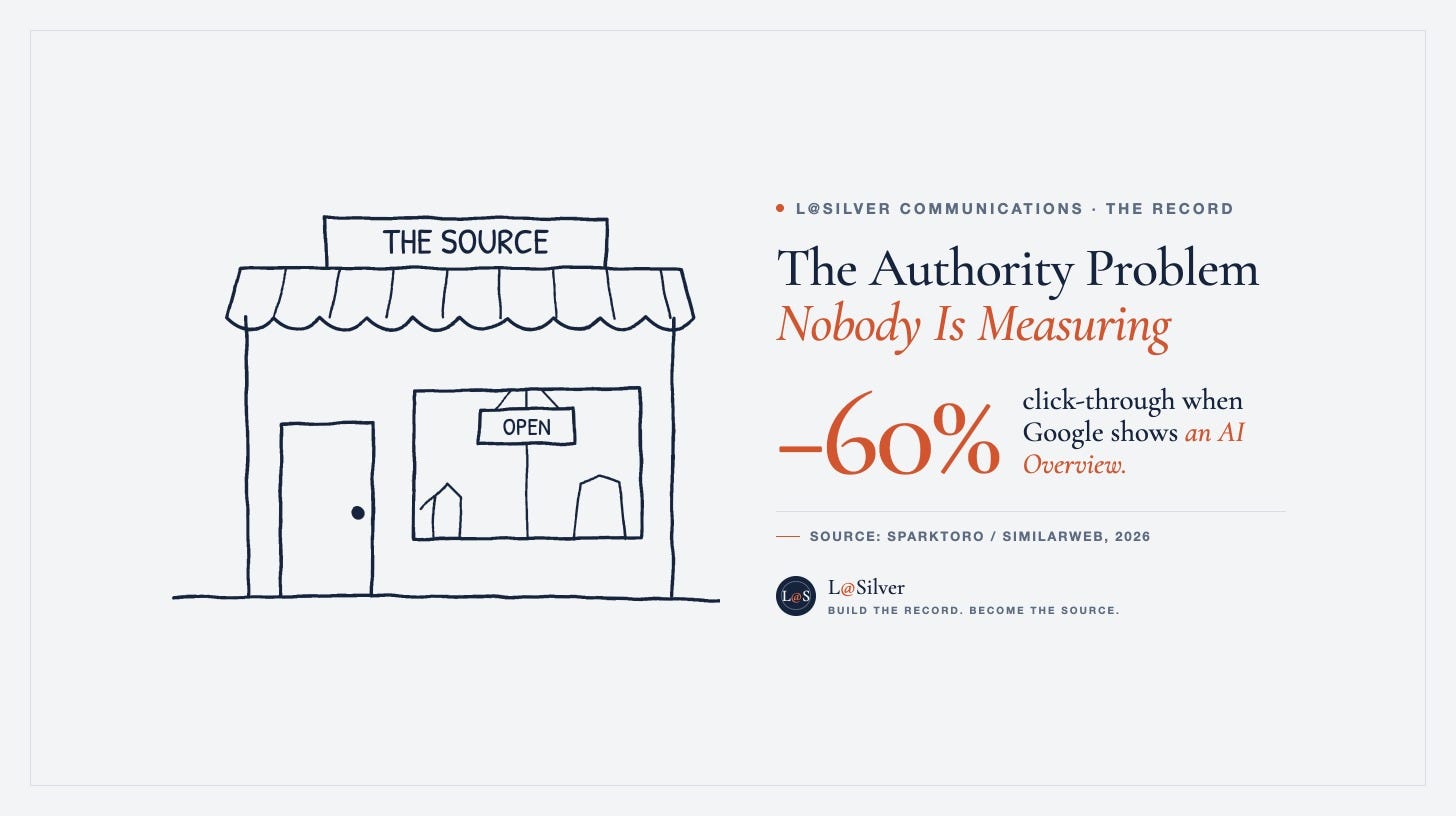
People stop at the answer. When Google shows an AI Overview, click-through rates drop by nearly 60% (SparkToro/Similarweb, 2026).
AI gets the source wrong. The EBU and BBC checked about 3,000 AI answers. In 31%, the sourcing was missing, misleading, or flat-out wrong about who said what.
So who cares? Anyone who needs to be believed.
Your website says who you are. Someone else says whether it’s true.
I tested it on my own firm. In two months, everything I could fix alone moved. In July, AI never mentioned me. By early September it named me in about 20% of the answers analyzed. Two weeks later, 5%. And what never moved at all was what other people say about me. Citations from anyone but me: still effectively zero.
Authority isn’t one score you hold. It’s a position that gets re-decided every time someone asks.
AI doesn’t trust claims. It trusts corroboration.
What I’d do about it
1. Check the answer, not your traffic. Ask ChatGPT, Gemini and Perplexity the questions your audience asks. Do it every month. Are you in there? Are they getting you right?
2. Put a real person out front. AI quotes people and publications, so give it someone: a scientist, a CEO, somebody the trade press calls again and again. And when that person moves on, plan the handoff. The old name keeps showing up in the answers long after they’ve left.
3. Keep explaining your changes. When you change a standard, the old version doesn’t disappear. It lives on in old articles, industry conversations and retailer FAQs, and AI keeps repeating it. Ask a question based on the old version, and AI will usually agree. The fix isn’t one announcement. It’s saying it clearly, again and again, in places people already trust.
4. Go deeper in the trade press. In niche categories, that’s where AI goes for the details. Being quoted when news breaks gets you into the story. Bringing your own data and point of view, consistently, is what makes your version the answer.
5. Don’t forget the people inside. Your employees explain every change before anyone else hears it, to clients, on LinkedIn, in public conversations. That’s corroboration too. If they can’t say it simply, nobody downstream will either.
The scoreboard changed. Authority used to be about who came to you. Now it’s about whether AI gets your name right when nobody comes.
Build the record.
Sources: Wikimedia Foundation, human pageview update (Oct 2025) and draft FY2026–27 Annual Plan (Apr 2026) · SparkToro/Similarweb zero-click study (Jan–Apr 2026) · EBU/BBC News Integrity in AI Assistants (Oct 2025) · L@Silver Communications, Client Zero audit via Spyglasses (July–Sept 2026)