


Same article, posted two places. On the company’s own site, AI cited it 8% of the time. Posted through a news outlet instead, that jumped to 34%. More than triple. That’s from a joint test by Stacker and Scrunch.
Citation research is starting to feel like information overload, and maybe that’s the point. Ask six different researchers how often AI cites a brand’s own website, and you’ll get answers from 2.9% to 86%. Not because anyone’s wrong, they’re just measuring different things and calling it the same number (full breakdown here).
Turns out it comes down to the question being asked. Ask a fact, like “what does this cost,” and AI usually goes straight to the source: nearly 60% of the time, per Yext. Ask an opinion, like “which one’s better,” and AI turns to reviews instead. Foundation found brand sites get cited just 2.2% of the time on those comparison searches.
So if your plan is “fix my website and I’ll start showing up in AI answers,” slow down. That’s not quite how it works. But don’t stop building the site either.
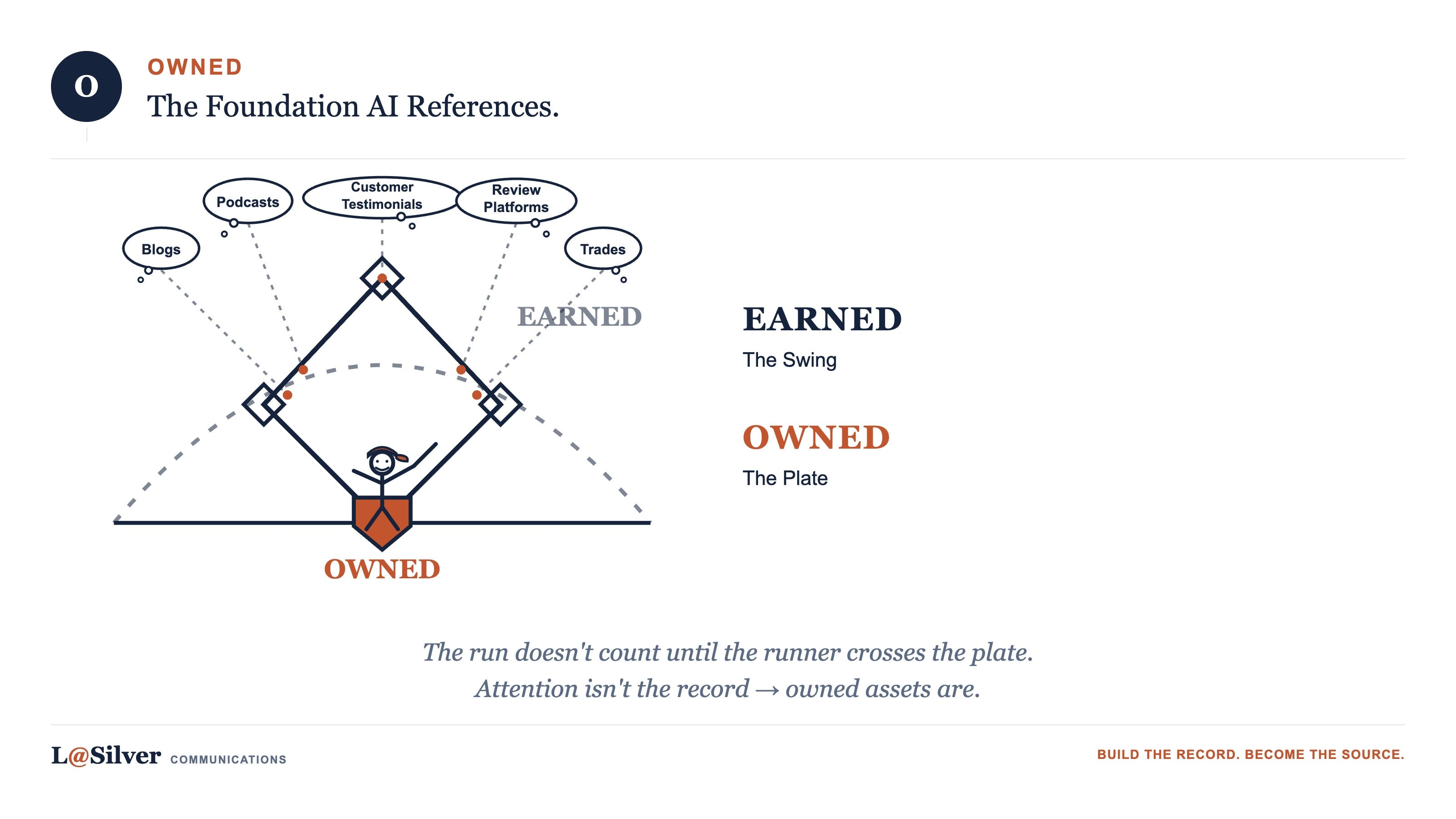
Here’s why. In RECORD, Owned was never meant to get you cited first. Earned media does that. Owned is what’s still standing when AI checks the citation. You can’t vouch for yourself, but someone else can, and then AI checks your site to see if it holds up.
Billy Beane didn’t win by getting his players more at-bats. He won by changing who made the team. Owned works the same way. It’s not the stat that gets you picked. It’s the check that keeps you in the lineup.
A home run doesn’t count until you touch the plate. Owned is the plate. Earned media is the swing.
So before you chase your next mention, check your own plate first. Does your About page actually match what people are already saying about you? If not, the run doesn’t count.
_________________________________________________________________________
Sources: